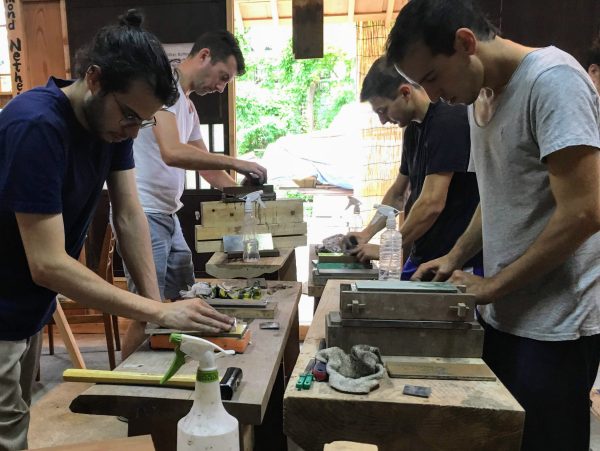
This program is a hands-on advanced course designed exclusively for graduates who have completed Suikoushya’s one-month woodworking class.
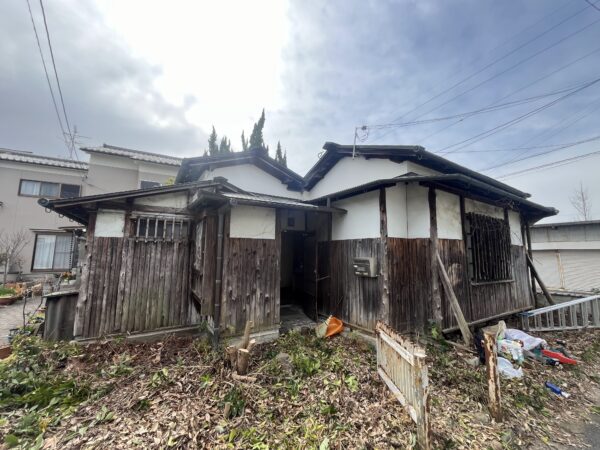
We will be carefully dismantling a traditional Japanese house (kominka) in Nara and relocating it to a new site.
This is a hands-on advanced course for those who want to further develop the skills learned at Suikoushya. Students will learn the entire process, from dismantling the old house to reconstructing it, on a real job site.
What You’ll Learn from Dismantling
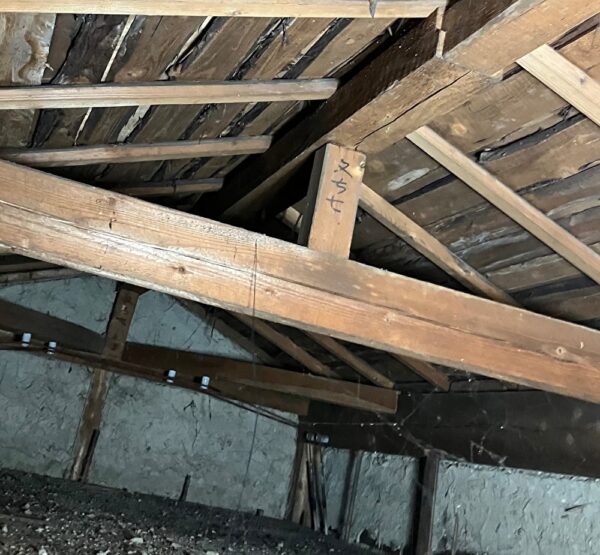
The process of dismantling a kominka teaches a great deal. You’ll be able to see firsthand how craftsmen of the past joined timber together, examining actual joinery and connections, and developing an eye for reading the tools and techniques used from the marks left by hand-carved work. You’ll also sharpen your ability to assess the condition of materials—identifying decay versus soundness—and gain a deeper understanding of wooden structures by approaching them in reverse, from the perspective of taking apart rather than building.
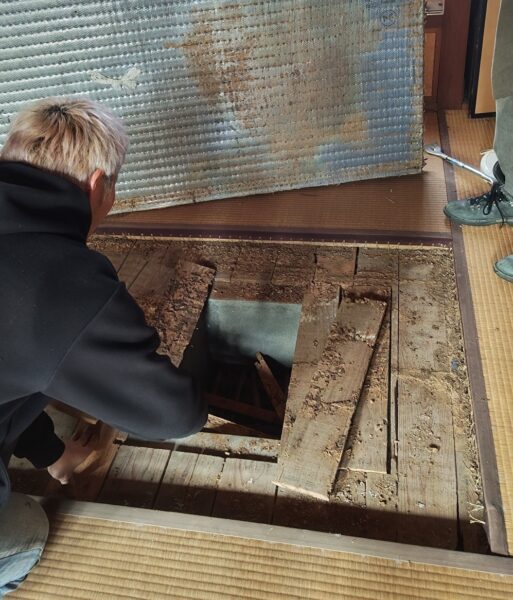
Another valuable part of this experience is discovering, through hands-on work, the accumulated time embedded in a building and the ingenuity that past craftsmen built into every
Above all, dismantling is not about destruction—it’s about taking apart with the intention of carrying something forward. Through this process, you’ll learn respect for the work of those who came before you, and develop an attitude of caring for materials with intention. Handling a building responsibly from start to finish is a truly valuable experience.
What You’ll Learn from Reconstruction
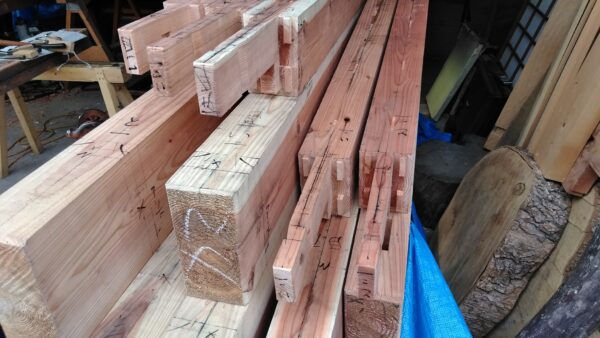
Reconstructing a kominka is not simply a matter of moving a building to a new location—it’s a process of verifying and internalizing, through actual assembly, the knowledge and skills gained during dismantling.
You’ll gain practical experience understanding the meaning of banzuke (assembly marks) and sumitsuke (marking lines) through real work, learning how to repair and reinforce damaged materials, and how to adapt a structure to fit a new site and foundation. The structure, techniques, and material conditions read during dismantling are confirmed piece by piece through the act of reassembly—offering a three-dimensional understanding of wooden architecture from both the “taking apart” and “putting back together” perspectives.
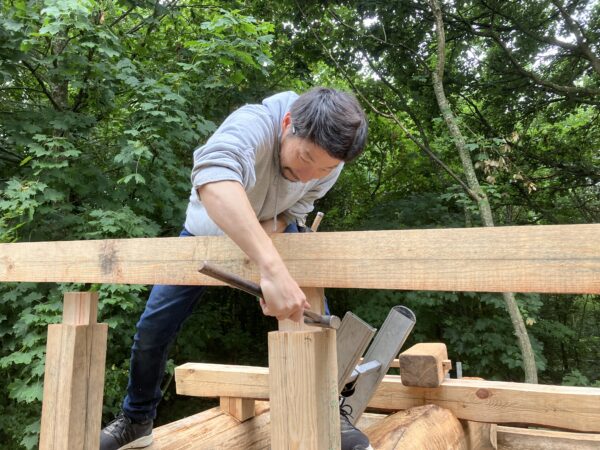
Reconstruction is also the process by which a single building continues to live on, transcending era and place. Considering how to adapt an old building to meet modern standards of earthquake resistance and usability is an important part of the learning as well.
Above all, through the process of reconstruction, you’ll come to feel the true essence of kominka restoration: not “destruction and an end,” but “carrying life forward.” You’ll gain a firsthand understanding of the sense of responsibility involved in passing on what past craftsmen built to the next generation and the next place, along with the culture and values of using things with care over the long term. Experiencing dismantling and reconstruction as a single, continuous process also fosters a sense of pride and self-awareness as someone entrusted with preserving kominka as cultural heritage for future generations.
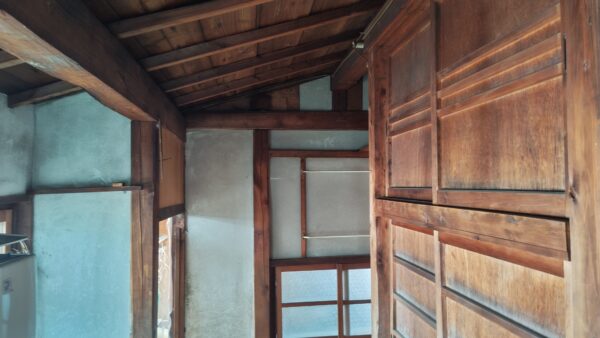
Being able to engage with timber and joinery that have weathered the passage of time, and with the wisdom of those who came before us, is an opportunity that can only come from dismantling and reconstructing a kominka—a truly once-in-a-lifetime chance!
Eligibility
Suikoushya Graduates
Schedule
Duration: September – December 2026 (continuing into 2027)
September – December 2026: Work will focus primarily on dismantling, repair, and sorting of materials
2027 onward: Reconstruction (relocation) work is planned to follow
A Message to Our Students
The skills you’ve built over your one-month woodworking class are just the beginning.
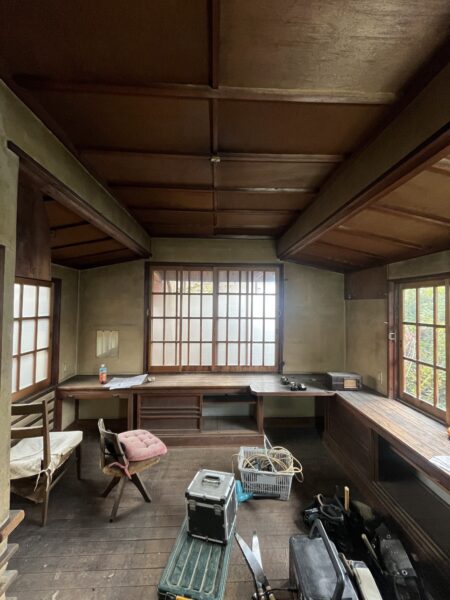
Take everything you’ve learned in the classroom—handling your tools, sharpening blades, and the feel of working with wood—and put it fully into practice on a real, living job site: an actual kominka. There are discoveries waiting there that you could never make from drawings alone.
Touching the work left behind by those who came before you, struggling, sweating, and using your own hands to carry a single building forward into the next era—there is no experience more rewarding or more honorable than this.
So come—let’s step up together into the next level of woodworking.
Let’s enjoy this special woodworking journey together!